A Retinoic Acid Autoregulatory Loop Governing Prefrontal-Motor Arealization
Publication details
This study, published in bioRxiv, looks at how retinoic acid helps guide early brain development. The authors found a loop in the developing prefrontal cortex that helps keep retinoic acid signals switched on: RA → MEIS2 → ALDH1A3 → RA. When Meis2 was removed in mice, some cells in the prefrontal area began to look more like motor cortex cells instead.
The paper suggests that this loop helps set up the different parts of the front of the brain, especially the prefrontal and motor areas. It also links this process to brain cell identity, brain connections and possible psychiatric disorders.
Keywords: retinoic acid, prefrontal cortex, motor cortex, brain development, MEIS2, ALDH1A3, gene regulation, neuronal identity, cortical arealisation, autism, intellectual disability.
Abstract
The frontal lobe comprises the prefrontal association cortex (PFC), which supports complex cognition and goal-directed behavior, and the motor cortex (MC), which executes movement. A hallmark of primate brain evolution is PFC expansion accompanied by a posterior displacement of the MC. Retinoic acid (RA) signaling has emerged as a key regulator of PFC specification and expansion. However, the mechanisms that spatially confine RA signaling within the developing PFC, and the downstream RA-responsive gene networks, remain poorly understood. Here we defined an RA-associated gene regulatory network (RA-GRN) in the developing human PFC and identified MEIS2, which encodes a transcription factor linked to intellectual disability and autism spectrum disorder (ASD), as its key hub of this network. Conditional deletion of Meis2 in postmitotic cortical excitatory neurons in mice results in a partial respecification of prospective prefrontal association territories toward motor-like molecular and connectional features, highlighting a critical role of postmitotic neurons in establishing and maintaining cortical areal identities. Concomitant with Meis2 loss, the population of excitatory neurons expressing the RA-synthesizing enzyme ALDH1A3, and consequently RA signaling itself, is markedly reduced in the developing medial prefrontal cortex (mPFC). These findings revealed a conserved autoregulatory loop: RA → MEIS2 → ALDH1A3 → RA that reinforces a PFC-enriched RA gradient and organizes the MC–PFC axis. Together, our findings reveal a postmitotic mechanism by which specific features of neuronal identity reinforce RA signaling to define key features of prefrontal and motor cortical territories, linking a classic morphogen to transcriptional identity, neural circuit formation and function, and potentially to psychiatric disorders.
Related publications
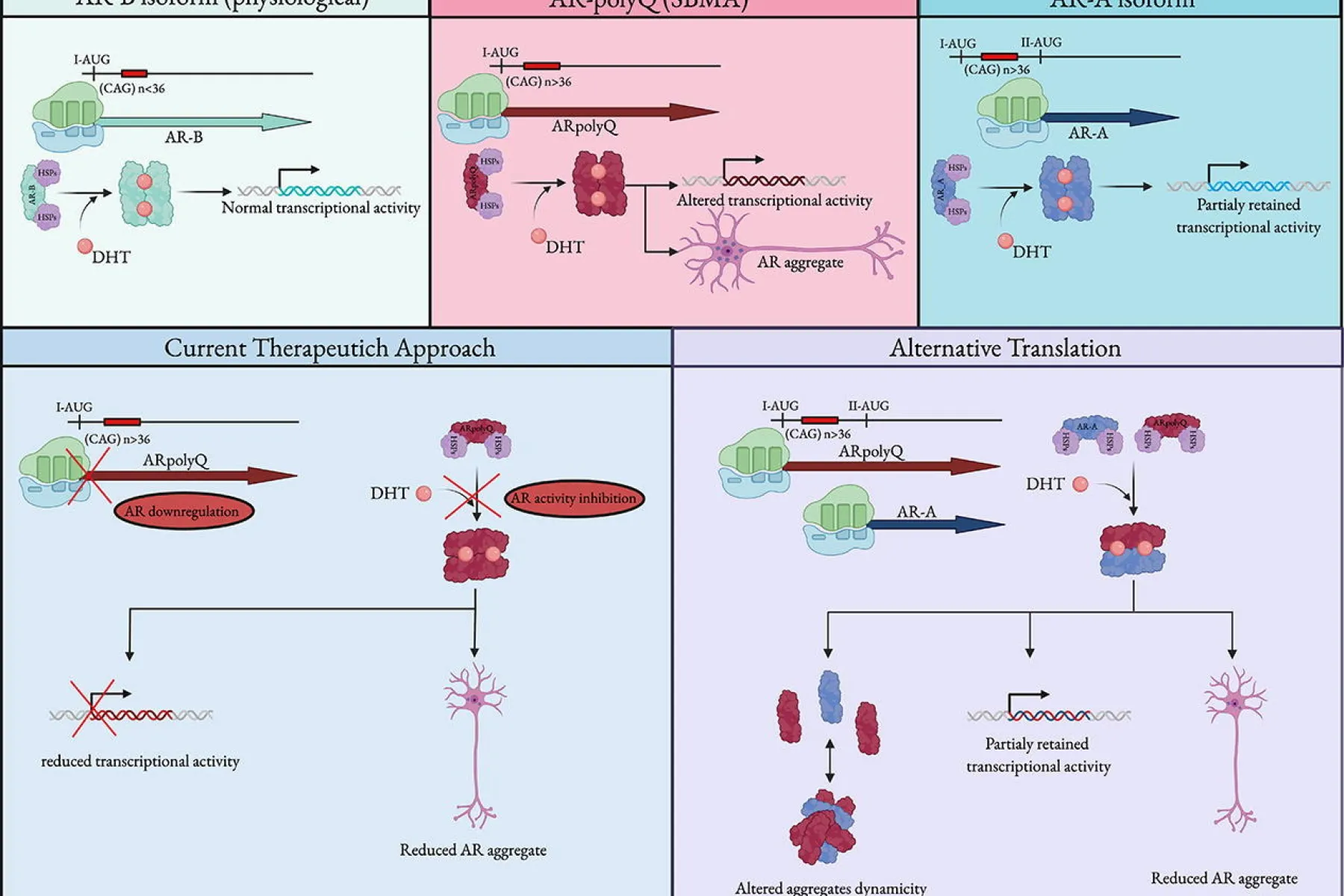
The alternative androgen receptor isoform A mitigates toxicity of polyglutamine-elongated mutant androgen receptor in spinal and bulbar muscular atrophy
Beyond innovation: why rare disease gene therapy needs a reset
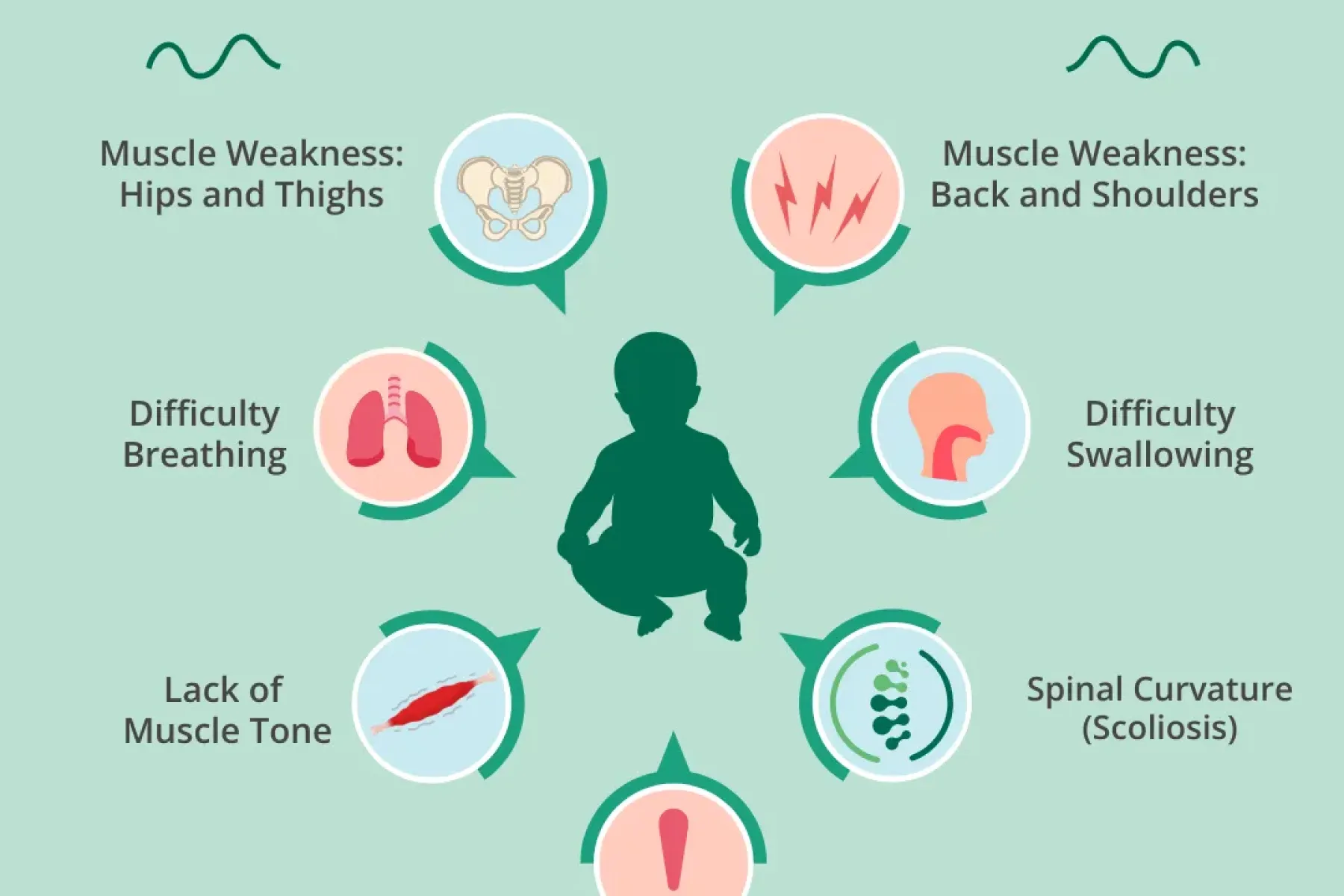
Efficacy and safety of risdiplam in patients with type 1 spinal muscular atrophy: a 3-year open-label extension of the two-part, phase 2 FIREFISH trial
A Validated Prognostic Score for Time to Loss of Ambulation in Patients With Duchenne Muscular Dystrophy
Genetic or pharmacological disruption of the MSH3 Y245/K246 IDL binding pocket slows CAG repeat expansion

Health economic evaluations of genomic newborn screening: Approaches by studies within the international consortium on newborn sequencing
Targeting toxic HTT1a could be the key to treating Huntington's disease
Spatial transcriptomics implicates the thalamus and cortex in autism and schizophrenia
The phenotypic spectrum and genetic determinants of severe spinal muscular atrophy in individuals with a single SMN2 copy: an international retrospective observational study